Filed under: It's all relative, Green(ish) Tips & Tricks, Big (Green) Deal, The 3 R's | Tags: disappearing ink, printer, reusable, Sustainable, tablet

As green(ish) as I try to be, I still keep a day planner in my purse, stay organized by writing lists and print out my crochet patterns so I can spread out on the couch while I work. Butchy bought me a Kindle Fire (which solved the the inner debate I was having – I couldn’t refuse a gift, now could I?), and that has allowed me to be more mobile with patterns and anything else I find online that I might otherwise want to print. I’ll also finally be joining the world of smart phones this month, so I’ll be experimenting with using the planner and stickies on that. But there’s really just something about the physical act of writing things down that helps me remember, which is why I was so pleased to come upon these two techie solutions to the ink and paper problem:
Filed under: Green 101, It's all relative, Permaculture! | Tags: Classes, Gardening, New York, Northeast, Permaculture, Sustainability, Workshops

Being subscribed to about a million and one Permaculture mailing lists, I’ve been seeing a overabundance of interesting workshops on the horizon for end of winter – summer in the North Country, Northeast, and beyond. I’ve listed the courses in chronological order as best as I could, but there’s a lot here, so get comfortable:
Filed under: Bad Weather Activity, Inspiration Station, It's all relative, Spotlight On | Tags: Crafts, Embroidery, Garden inspired, Georgiana Brown Harbeson, Joanna Reed

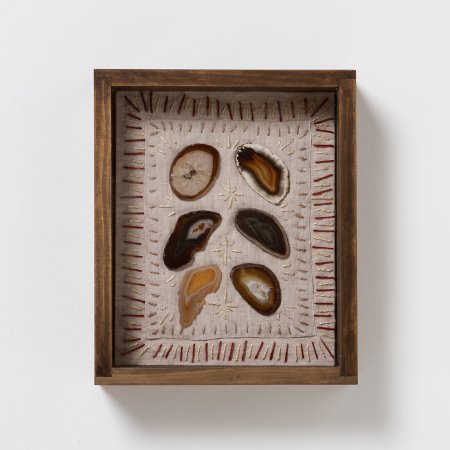
A recent newsletter from Sublime Stitching’s Jenny Hart alerted me to the naturey needlework genius of Georgiana Brown Harbeson. Jenny Hart had come across a Needlecraft Magazine cover from 1931 featuring Brown Harberson’s work and set out to learn more. One of her readers was kind enough to send her a photo of their large Rousseau-style piece Brown Harberson designed:
Filed under: Bad Weather Activity, Communal Spirit, It's all relative | Tags: Arts and Culture, Lecture Series, North Country Arts Council, NY, Watertown

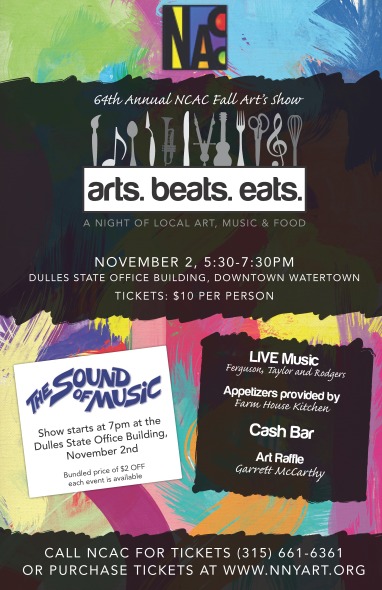
Over the summer I started volunteering on the North Country Arts Council’s education committee. After seeing a few classes get canceled due to lack of enrollment, I had an idea to host an inexpensive lecture series that would get locals in the door without breaking the bank. My thinking was that once they saw what was going on at the Arts Council, they might be more apt to sign up for a full class. Thus, the Lucky 7 Lecture Series was born!
While the original idea was mine, everyone on the education committee helped enormously by booking a wide variety of interesting, local speakers. I am so excited about this upcoming series and hope that if you live in the Watertown area that you stop by for at least one of the lectures. Besides the opportunity to learn something new from fascinating members of your own community, there will also be door prizes donated by local businesses – the more lectures you attend, the more chance you have to get lucky.
For more info, and to purchase tickets online, visit the NCAC website. Below is the full line-up for the Lucky 7 Lecture Series:
Filed under: Amis & Famille, Inspiration Station, It's all relative | Tags: Inspiration, Nature, Photography, Samantha West
I’ve mentioned before what an amazing photographer mon amis Samantha West is, and if it was up to me, I would name this recent series of hers “Earth Mothers:”

Filed under: Big (Green) Deal, It's all relative | Tags: Efficient energy use, Energy audit, National Grid, North Country, Small business

I recently blogged about how a flower shop could go green, but my boss was apparently already ahead of me, thanks to the Small Business Program from National Grid. When I came back from Christmas break, every light bulb/fixture in the store had been switched to an energy-efficient model – some of the bulbs are supposed to last 10 years! And the best part? National Grid pays for most of the initial install.
Filed under: Amis & Famille, It's all relative, The 3 R's, What the F?, Workin’ 9-5 | Tags: helium shortage, Magnetic resonance imaging, National Helium Reserve, Non-renewable resource, Sustainability

Being that I work in the party balloon industry, I overheard startling talk late last year that we (as a country/planet) were experiencing a shortage of helium. I personally had no idea that helium was a non-renewable resource, so this news resulted in a flurry of research.
According to a 2010 article from The Independent, the trouble began with a U.S. law that was passed in 1996, “which has effectively made helium too cheap to recycle.”
The law stipulates that the US National Helium Reserve, which is kept in a disused underground gas field near Amarillo, Texas – by far the biggest store of helium in the world – must all be sold off by 2015, irrespective of the market price.
“In 1996, the US Congress decided to sell off the strategic reserve and the consequence was that the market was swelled with cheap helium because its price was not determined by the market. The motivation was to sell it all by 2015,” Professor Richardson [Nobel laureate and professor of physics at Cornell University in Ithaca, New York] said.
Filed under: Bookworm, It's all relative, What the F? | Tags: Book Review, Greenwashing, Six Senses Resorts, Slow Living, Sustainability
Over the summer, Miss Angela and her sidekick Dustin gave us a copy of Slow Life: Sustainable, Local, Organic, Wholesome, Learning, Inspiring, Fun, Experiences. Perfect as a large-format coffee table book, and full of useful tips and interesting profiles on slow living travel destinations, I still found it distracting that the whole package seemed more like an advertisement for the Six Senses spa/retreat company then a collection of ideas. Not that I mind gazing at gorgeous photos of tropical getaways (especially during winter in the North Country – brrrr), but for all its supposed good intentions, Slow Life, had a slight air of greenwashing about it, if only because of the misleading title. The book should have been named Six Senses Resorts: An Experience of Sustainable, Local. Organic, Wholesome, Learning, Inspiring, Fun Slow Living. In the spirit of transparency, that would have cleared up where the publishing money was coming from.
Filed under: Inspiration Station, It's all relative, Spotlight On | Tags: American Folk Art Museum, Art Museums, Arts and Entertainment, Folk art, New York City

The American Folk Art Museum was a museum I discovered late in my NYC-life, but it quickly became one of my favorites. Housed in a narrow building on the same block as the MoMA, it’s not only free to enter, but features some of the country’s most beautiful examples of folk art.
Filed under: A Garden of One's Own, It's all relative, Spotlight On | Tags: Gardening, Labyrinth, Medicine Wheel, Path of the Feather, Religion and Spirituality
I first learned about the practice of making Medicine Wheels a few years ago, but only recently discovered that one can plant a garden in the Medicine Wheel style! In short, the design mimics traditional Medicine Wheels, with the “doorway” facing east, and a variety of plants for bloom from Spring through Autumn. The different colors represent the seasons as well.
Below is a good example of a Medicine Wheel garden (obviously adjust the plant choices to fit your Zone):
![Medicine[1]](http://fthats.files.wordpress.com/2011/12/medicine1.jpg?w=420&h=543)
A more in-depth description of the process, and intention, associated with a true Medicine Wheel garden is available from Thunder Mountain Lenape:
The stone circle says “This place is sacred”
A place to remind all to live in good relationship with all life in this Universe. The Medicine Wheel represents the Circle of All Life. When one sits in the wheel or walks the path and evokes the Sacred, all life comes to sit in council. (Animal relatives, plant relations, stone people, and spirit relatives). The Wheel of Life – The Medicine Wheel, is a map for everything in the Universe, a blue print of the Web of Life. Within each of us too, the Medicine Wheel exists as our inner council.
Filed under: Amis & Famille, Bookworm, Deep Thoughts, It's all relative | Tags: Buddhism, Change, New Years Resolutions, Pema Chödrön, Religion and Spirituality
As the current year draws to a close, I’ve found myself reflecting on how far I’ve come, and where I hope to be in the coming year. In the spirit of change, I recently read a couple Pema Chodron books, but the one that stuck with me the most was Start Where You Are: A Guide to Compassionate Living. Now I’ve always considered myself fairly compassionate of others, but Start Where You Are means starting with YOU – with not only complete accountability for your actions, but complete compassion for yourself as well. Now that was something I had never considered before.
The past couple of years have been full of changes, and many that happened at the start of this calendar year were not so good. March was a particularly bad month, full of family health issues, increasing stress around the wedding and the recognition, and subsequent severing, of toxic areas of my life. But I stayed strong and good things started to fill the new-found space I had created – since then I have made some great friends, involved myself in worthy organizations and have become (mostly) content with life in general.
I’ve never been one to follow any one religion or practice, but Buddhism has interested me* ever since a junior highschool project unearthed the angst-friendly gem that “life is full of suffering.” Anyone who leads a normal, uncharmed life knows this is the truth, but Buddhists use this suffering/adversity to learn a thing or two about themselves. And so learn I did, and what I found was not always pretty. But it wasn’t particularly ugly either – just very human.
Filed under: Big (Green) Deal, Eat Your Zipcode, It's all relative, What the F? | Tags: biopiracy, Environment, India, Monsanto, Sustainability

**This post was featured in the On Our Radar section of Ecopressed!**
Just last night Butch and I were watching the PBS version of Michael Pollan’s Botany of Desire, and now I see that biotech giant Monsanto is being sued by the Indan government for “biopiracy:”
Representing one of the most agriculturally bio-diverse nations in the world, India has become a primary target for biotechnology companies like Monsanto and Cargill to spread their genetically-modified (GM) crops into new markets. However, a recent France 24 report explains that the Indian government has decided to take an offensive approach against this attempted agricultural takeover by suing Monsanto for “biopiracy,” accusing the company of stealing India’s indigenous plants in order to re-engineer them into patented varieties.
Filed under: Big (Green) Deal, Green(ish) Tips & Tricks, It's all relative, The 3 R's | Tags: Christmas tree, conservation crop, Organic Gardening, Sustainability, tree farm

As someone who only celebrates Christmas through my husband and his family, it is tempting to kitsch it up with a pink plastic tree, but that wouldn’t be very sustainable, now would it? Instead I chose to buy a potted norfolk pine and decorate it with scraps of ribbon from work and leftover yarn from crochet projects. I would have loved to plant it outside when the weather gets warm again, but since it’s made for the semi-tropics, I’ll probably be reusing it every year inside the house. For those of you debating the merits of a real tree vs an artificial one, read this article from Organic Gardening:
The allure of an artificial Christmas tree is obvious: reusable, dependably lush and symmetrical, and best of all, mess-and maintenance-free. But convenience has an environmental price tag, making fresh, fragrant, real trees a better choice. Artificial trees are made from materials such as polyvinyl chloride (PVC) and metal and are often imported from China. Because they cannot be recycled, artificial trees end up in landfills when they are no longer useful.
They are also questionable in terms of human health. California Proposition 65, a law that protects consumers from exposure to toxic and cancer-causing substances, requires artificial trees made in China to have a warning label about the potential of lead poisoning. A 2008 report to the U.S. Environmental Protection Agency on children’s exposure to lead noted, “Artificial Christmas trees made of PVC degrade under normal conditions. About 50 million U.S. households have artificial Christmas trees, of which about 20 million are at least nine years old, the point at which dangerous lead exposures can occur.”
Real Christmas trees, in contrast, are grown on farms in all 50 states, taking up to 15 years to reach harvestable size. During that time, they improve air quality by emitting oxygen, and they provide habitat for wildlife—often on ground that is unsuitable for other crops, such as steep slopes and areas beneath power lines.
“Real trees are an important conservation crop,” says Tom McNabb of Yule Tree Farms, a wholesale grower in Oregon. McNabb points out the environmental superiority of oxygen-producing trees “versus a product made from petroleum with additives like lead to keep the needles pliable and which returns toxic gas into the atmosphere during production and disposal.”
In 2007, some of the largest U.S. Christmas tree growers formed the nonprofit Coalition of Environmentally Conscious Growers. Member growers employ sustainable practices and planting methods that promote good care of the land, including riparian and wetland management. Natural barriers, buffer zones, and vegetative cover protect ditches and streams and contribute to healthy watersheds. Growers use natural and mechanical methods to control pests and competing weeds. The 2007 Census of Agriculture from the USDA reported that of the more than 343,000 acres of Christmas trees grown in the United States, only 4 percent used supplemental irrigation.
Real trees have postholiday value, too, as communities collect and recycle them to turn into mulch, use them as erosion barriers, or sink them in ponds for fish habitat.
Click here to learn how to reuse or recycle a real Christmas tree after the holidays.
Filed under: Inspiration Station, It's all relative | Tags: Exploded Flowers, Flowers, Fong Qi Wei, Nature, Photography

Found via CosmicWolfgirl, Fong Qi Wei’s “Exploded Flowers” series is a magical disassembly not only of the physical construction of the flowers, but of the exploratory nature of photography itself.

Filed under: ... in Natureland, All Things Bright..., It's all relative | Tags: Maine, Nature, Photography, Winter, Woods
Just a few peaceful images I took while visiting my parents in Maine…taking a deep breath before the holidays arrive in full force!

Filed under: Amis & Famille, Eat Your Zipcode, It's all relative, Permaculture! | Tags: Foraging, Tutorial, Upstate NY, White Pine Tea, Winter Solstice

Grey Catsidhe over at the Ditzy Druid posted a great Winter Solstice tutorial on white pine tea:
Tonight, a recipe perfect for wintery nights! It uses an ingredient native to my home in Upstate NY – pinus strobus - The Eastern White Pine. If you live around the North Eastern part of America, you’re probably very familiar with these trees. They should be especially recognizable to anyone who has ever spent time in the Adirondack Mountains. They’re very common there! In fact, the word “Adirondack” is Iroquois for “bark eater” – a reference by the Mohawks of the Algonquins. They would eat the nutritious inner bark during difficult winters. The White Pine is also culturally important to the Iroquois as the Tree of Peace.
Filed under: ... in Natureland, Amis & Famille, Inspiration Station, It's all relative | Tags: Dog Chapel, Dog Mountain, Photos, Stephen Huneck, Vermont
On the way back home from Maine, and on the suggestion of a good friend, we stopped at the Stephen Huneck Gallery and Dog Chapel on Dog Mountain in St. Johnsbury, VT. Freddy-dog was beside himself with excitement (although a little confused about the carved wooden dogs), and Butch and I enjoyed the art and furniture in the gallery. In the chapel itself, I left an “in memory” note to my childhood dog, George, and then took a million photos, as usual:
A beautiful legacy to a wonderful artist and all that he held dear. And apparently it was an enlightening moment for Fred, who has been extremely well-behaved since we got back – obviously he saw the light on Dog Mountain!